1970 Topps Baseball

  • Subscribe to our RSS feed.
  • Twitter
  • StumbleUpon
  • Reddit
  • Facebook
  • Digg

Tuesday, 17 December 2013

My New Revelations on Black Perú

Posted on 10:56 by blogger


Until today, the focus of my Afro-Peruvian experience and observations has been on the province of Chincha in Southern Perú, dubbed as the hub of Afro-Peruvian culture. It is here, where every February, people from all over Perú, and different parts of the world, come in droves to party in celebration of black heritage, and it’s here where I myself have family-like connections and visit every chance I get. 

However, on a couple of occasions, I started receiving comments on my blog from Afro-Peruvians informing me that Chincha is not really the hub of black culture; that most of the black people live in Northern Perú. Most recently, an African-American currently living with his Afro-Peruvian wife in the northern town of Zaña confirmed this to be true. He explains that due to Chincha’s heavy influx of migrants from the Andes and resulting interracial marriages, the African presence is not as strong as before. And this is further exacerbated by the fact that many of Chincha’s blacks moved to major cities, like Lima, seeking better job opportunities. I have to admit that when I first arrived in Chincha, I hardly saw any black people. It wasn’t until I arrived in the District of El Carmen where I saw a heavy black population, and even El Carmen itself has a large population of Mestizos from the Andes.


The greatest Afro-Peruvian populations of the north coast are found mainly in the regions of Piura and Lambayeque where there are large rice fields and mango plantations. The colonial city of Zaña in Lambayeque, once the Peruvian capital, is famous for being the second most important Afro-Peruvian city in the north. It is here where you will find the Afro-Peruvian museum, not to be confused with the National Afro-Peruvian Museum in Lima.


Recently it has been verified that the community with the greatest concentration of Afro-Peruvians is Yapatera in Morropón (Piura), made up of around 7,000 farmers who are largely descended from African slaves of "Malagasy" (Madagascar) origin. They are referred to as "malgaches" or "mangaches".- See more at: http://travelerspress.com/visit-northern-peru/#sthash.mAlgItGq.dpuf

With my new African-American friend living in Zaña with his wife, and my love for Afro-Peruvian culture, Piura and Lambayeque are in Northern Perú are now on my itinerary the next time I enter Perú

Read More
Posted in Afro-Peruvian, Afro-Peruvians, black Peruvian, black Peruvians, peru | No comments

Saturday, 14 December 2013

Some Unspoken Truths about Afro-Latinos

Posted on 15:12 by blogger

Statue of Venezuela's Pedro Camejo, one SimónBolívar's 
Lieutenants in the war of independence from Spain


My younger brother, a true world traveler, and I got into a disagreement about discussing race with Afro-Latinos. I myself am very reserved around Afro-Latinos on this subject because too many of them are unaware that they are indeed black. However, my brother is bold and dives head on into the subject. He told me of a conversation he had in Mexico with a black woman who denies having any African roots. She seriously claimed that her lineage goes back as far as Spain. Then there are those of mixed African heritage who insist on referring to themselves as Indio (Taino Indian), which to me, has more to do with internalized racism . They completely overlook the fact that the Tainos were exterminated by the Spaniards either by disease, violence, and overwork. This is why African people were imported; to replace of the dying Tainos in the physically demanding business of slavery. 

As for those blacks and browns who take such pride in their Spanish ancestry, they might want to keep in mind that it was the result of brutal rape of African women by Spanish slave masters, and not romantic love. African-American comedian George Mooney, in one of his monologues, alluded to the fact that just because he speaks English that does not make him look like Queen Elizabeth of England. The same principle applies to Latinos. Just because one speaks Spanish does not make her look like Queen Isabela of Spain.


Many Latinos, including Afro-Latinos, who come to this country and turn their noses up at African-Americans are simply clueless to the history of the civil rights movement, and how black (and white) Americans sacrificed their lives and were jailed so all people, regardless of color or national origin would have better lives in a country that preaches liberty and justice for all. I wonder how many of these Afro-Latino baseball players realize that were it not for an African American by the name of Jackie Robinson who broke the color line and endured humiliation by teammates and fans that they would not be enjoying the opportunity to play major league baseball today. Where would the likes of Dominicans like Sammy Sosa, who bleached his skin beyond recognition, and who allegedly claims “Taino” heritage, be today were it not for Jackie Robinson and star members of the segregated Negro baseball league.


Fortunately,  throughout my travels and online interactions with Afro-Latinos throughout Latin-America, I’m meeting more and more blacks from places like Bolivia, Ecuador, Perú, Uruguay, and heck, even Argentina who recognize and celebrate their black heritage. I recently met a friend who was surprised that I was surprised that a black pride movement has begun to spring up in the Dominican Republic.
Read More
Posted in Afro Latinos, black Latinos, Latinos | No comments

Tuesday, 10 December 2013

Being Sneaky with Spanish Contraband

Posted on 11:25 by blogger

The Countee Cullin Library in Harlem, NY

When I was in elementary school, my father began to notice an undesirable trait in me, and was determined to nip it at the bud. I was very sneaky. My father, a single parent, punished me severely whenever he caught me trying to be slick. He felt that if he let me get away with the little things as a child, I would graduate to bigger things as teen or as an adult, and eventually wind up in a place like Rikers Island, a jail  facility in the middle of New York City's East River.

Living in Harlem, NY, at that time, made my father very paranoid and afraid that one day I might get hooked on drugs, be involved in a gang, or engage in some other type of criminal activity. Therefore, he kept a very close eye on my younger brother and me sheltering us from the streets.

I didn't know it at the time, but my father did let me get away with one thing presumably behind his back. There were items that I used to sneak into the house for self indulgence. Those items were books. At the age of 10 and 11, I was teaching myself how to speak Spanish. The reason I surreptitiously taught myself Spanish was because of my father's straight-laced academic outlook on language learning.

One day, I was browsing the children's shelves of Harlem's famous Countee Cullen's library near my home, and ran across a book entitled Fun With Spanish. Exhilarated, I brought the book home and immediately began to study it in the living room while my younger brother watched TV, and my father, an avid reader,  indulged himself in his reading material.

Every time I learned a new word from that children’s book, I recited it to my father who himself learned French, and some German, while being stationed in Europe while in the US Army. He even taught me a few words in both languages, and that gave me the false impression that he would be so pleased at my learning Spanish. Instead, he burst my bubble insisting that I learn English first. Well, that did not make any sense  because English was the only language I knew; so I thought (with my Ebonics speaking self). Today, as an adult, I can see his point of view because if you get a grasp on English grammar, learning other languages comes much easier because so many language books use English grammar as a reference point to queue you in on the grammar of your new language.

However, I felt overwhelmed by all of my Puerto Rican neighbors and schoolmates who spoke Spanish around me. As a child, I thought it was so cool to be able to speak a second language, and Spanish was my choice. I was not going to let my father stop me. In my exuberance, I would approach every child who appeared to be Puerto Rican, even strangers, and practice what I learned on them.

In the sixth grade I befriended Carlos Bettencourt, a Puerto Rican classmate and visited his home every day after school where Spanish was spoken with his family. Carlos later suggested that I start a pen pal relationship with a female cousin of his in Puerto Rico. His mother used to invite me to her church in nearby Spanish Harlem so I could be totally immersed in the language. It was this experience that makes so many Latin-American people I meet  today, even as far away as Perú and Ecuador where I visited on multiple occasions, suspect that I too might be Puerto Rican. It was my accent..A co-worker who comes directly from the island of Puerto Rico, told me that I sound more like a Nuyorican (a New York Puerto Rican).

Finally, one day, my younger brother struck up a conversation with my father about his foreign language skills. I don’t remember how this topic brought me into the conversation, but my father told my brother, emphatically, that Billy ( referring to me) studies Spanish. I began to wonder how in hell does he know? My father knew it all the time because I was not as slick as I thought. He did what every responsible, attentive parent does, inspect my room when I was not around looking for contraband like weapons, drugs, or cigarettes. The only thing that he found was my Spanish-learning material. Surprisingly, he never made a big deal out of it. The only reason why he told me to learn English first was to stop me from interrupting his reading to practice my Spanish on him. He felt better when I told him that I was practicing on the Puerto Ricans.


Read More
Posted in Learning Spanish, Puerto Rican, Puerto Rico, Spanish, The Spanish language | No comments

Saturday, 7 December 2013

Dominican Republic’s Persecution of Haitians

Posted on 00:00 by blogger

Demonstrators outside Dominican consulate in New York City protesting 
the persecution of Haitians in the Dominican Republic.
 
The hatred of Haitians in the Dominican Republic reaches back decades, if not centuries to the point of death and deportation. Recently, the Dominican government issued a court order that may force tens and thousands of Haitians to be deported even if they were born in the Dominican Republic. Hundreds have already returned to Haiti amidst anit-Haitian violence whom police officers have escorted about 600 across the border for protection, per their request. Many of these Haitians who were born and or raised in the Dominican Republic speak only Spanish and not Haitian creole. They may not have any family in Haiti, and in addition, face extreme economic hardships. This ruling has led Caribbean leaders to defer an application from the Dominican Republic for membership in Caribbean Community (CARICOM), the region's largest trade and cooperation bloc.

Due to the deep-seated racism against blacks in the Dominican Republic, even the average black Dominican will state, I’m not black, I’m Dominican. They refuse to identify as black because they do not want to be identified and persecuted as Haitian. Most black Dominicans, such as Sammy Sosa (allegedly) have gone as far as declaring Taino heritage. The Tainos are the indigenous people who were enslaved by the Spanish after Columbus' arrival and perished through overwork and disease before African slaves were brought in to replace them.

Haiti and the Dominican Republic share the island of Hispaniola, where Christopher Columbus established the first European settlement in 1492. Despite their shared history of colonialism and slavery, dictatorship and oppression, a physical and emotional border has long separated the two countries. By 1801 the famous ex-slave, Toussaint L'ouverture, had freed all the slaves on the island of Hispaniola and united it under his governorship. In 1808, five years after L'ouverture' death, a group of rebels started a war to return the eastern part the island to what is now the Dominican Republic– the west by this point was the republic of Haiti. By 1822,  Haiti had established control of the whole island once more. Indeed, the Dominican Republic gained its independence from Haiti, and not Spain, in 1844.

Modern times have demonstrated no less hostility. In 1937, Dominican dictator Rafael Trujillo ordered the massacre of 10,000 to 25,000 Haitians in border areas where many worked cultivating sugar.  Recently, there has been talk of African-American travelers boycotting the Dominican Republic, and there has even been demonstrations, such as the one in New York in front of the Dominican Republic embassy to pressure the Dominican government to stop the persecution. 
 
What really needs to be addressed here, in my opinion, is the reason why so many Haitians flee their homeland in the first place for places like the Dominican Republic, the USA, France, and Cuba. I even met Haitians during my trip to Venezuela. While CARICOM and so many others are damning the Dominican government, what about the corrupt  Haitian government that has a long history of persecuting its own people? If Toussaint ‘L Overture were alive today, he’d be absolutely appalled with what is going on in the country he risked his life to liberate from France, and become the first black independent nation in the western world.

Read More
Posted in Afro Dominicans, Black Dominican Republic, Dominican Republic | No comments

Monday, 2 December 2013

Afro-Ecuadorian Outsmarts Her Slave Masters

Posted on 22:30 by blogger


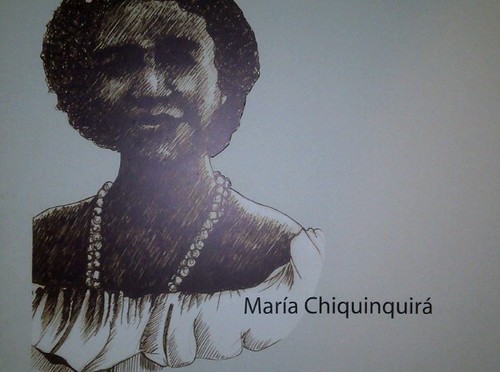
María Chinquiquirá (pronounced Cheen-kee-kee-RAH), a former black slave in what is now Ecuador's largest city, Guayaquil, is today an important symbol in Ecuador, particularly among Afro-Ecuadorians whom from my observations during my two visits, and from my correspondence with Afro-Ecuadorian Facebook friends, are raising their consciousness and pride in their heritage. Someone in an Afro-Ecuadorian forum referred to Ecuador's black movement as being in the spirit of María Chinquiquirá.

María, born in Guayaquil had a history of being mistreated by men. She lived during the 16th century, a time when being black meant being a slave in Ecuador. Her intelligence, knowledge, and determination along with a thorough understanding of her rights according to Ecuadorian law, changed the course of her history and those of thousands of women in Ecuador as she became the first slave in Ecuador to win her freedom and that of her daughter through a legal battle in May 1794. She won her freedom by accusing her masters of dishonorable acts including, siring children with slave women, requiring work on Sundays, withholding time for mass, and failing to provide instruction in the faith. Her portrait hangs in the Museum of Nahim Isaias in Guayaquil.
Read More
Posted in Afro-Ecuadorians, black Ecuadorians, Ecuador | No comments

Saturday, 30 November 2013

My Issue With the World-Renoun Afro-Peruvian Singer Susana Baca

Posted on 00:00 by blogger
It was in 2010 when I posed a question about the world-class Afro-Peruvian singer Susana Baca in my blog post entitled, A Question about Susana Baca, who by the way, was the first Black cabinet minister of the Peruvian government.  

To me, she is the Spanish-speaking version of Billie Holiday or Bessie Smith with upbeat rhythm sections along with fluid dance moves as she combines Afro-Peruvian, Afro-Cuban, and jazz in her music.

As I stated in my prior blog article, I was on a natural high for six months, after seeing her perform for the first time in 1999. This experience inspired several future trips to Perú where I established solid Afro-Peruvian social connections.

With all that said, here is my issue with Susana Baca:

She travels the world singing about Perú's “African” culture, but seldom hires black Peruvian musicians in her five-to-six-piece bands. I've seen her perform on three occasions and saw only one black person in only one of those three performances. With black Peruvians suffering enough racial discrimination when it comes to jobs, why is she perpetuating it through Afro-Peruvian music? Several people responded to my blog article mostly in agreement with my concern. Others wanted to withhold any judgement until they get more facts on the matter.


Finally, after three years, I get to hear some facts from Timothy, an African-American friend living in Perú with his Afro-Peruvian wife. He says that the US visa system is partly to blame. He explains that it is tough for Afro-Peruvians to get a visa because many are below the poverty level, and that Susana has to redo her entourage for each country with visa restrictions. Timothy added that there have been issues with members of her band who paid $1000s for an entertainment visa to a foreign country and later defected. The visa requirements for the US alone is set far above the income levels of Afro-Peruvians. Some need to own property to assure that they have a reason to return to Perú.
Read More
Posted in Afro-Peruvian, black Peruvians, Perú | No comments
Older Posts Home
Subscribe to: Posts (Atom)

Popular Posts

  • Ecuador Celebrates Black Heritage Week
      Afro-Ecuadorian Cultural Center (below) Negro, negro renegrido       Black, black, blackened Negro, hermano del carbón       black, broth...
  • My New Revelations on Black Perú
    Until today, the focus of my Afro-Peruvian experience and observations has been on the province of Chincha in Southern Perú, dubbed as the ...
  • Black Communities of Central America
    Garífuna in Peril The Garifuna people (pronounced Gah-REE-fuh-ah), descendants of West Africans who intermarried with Indigenous people, na...
  • Afro-Ecuadorian Outsmarts Her Slave Masters
    María Chinquiquirá (pronounced Cheen-kee-kee-RAH), a former black slave in what is now Ecuador's largest city, Guayaquil, is today an im...
  • September - Bolivian “Black Heritage” Month
    Black Bolivian music and dance known as “Saya” In 2011, the National Afro-Bolivian Council declared September to be Black Heritage Month wi...
  • Contemporary Expert on “Black” Mexico
        Professor Bobby Vaughn, PhD AFRO-MEXICO With my being a lifetime student of the Spanish language and an explorer of Black heritage in La...
  • Why Am I Not Considered “Black” All of a Sudden?
      I'm in the back (2nd from right) with members of a Black  family in El Carmen, Perú, the hub of Afro-Peruvian culture My Spanish is fa...
  • Argentina's Black Awareness and Civil Rights Movements
      María Elena Lamadrid When Maria Lamadrid went to the immigration counter with her new Argentine passport in preparation for her trip to Pa...
  • My Issue With the World-Renoun Afro-Peruvian Singer Susana Baca
    It was in 2010 when I posed a question about the world-class Afro-Peruvian singer Susana Baca in my blog post entitled, A Question about Sus...
  • Who Is Black? A Latina Asserts Her Identity!
    I was just an 18-year-old Freshman at the State University of New York at Albany where one Saturday morning, a group black students gathe...

Categories

  • African American-Latino World
  • African Diaspora
  • African-American men
  • afro bolivian
  • Afro Costa Rica
  • Afro Dominicans
  • Afro Latinos
  • Afro-Argentina
  • Afro-Bolivians
  • Afro-Colombians
  • Afro-Cuban
  • Afro-Cubans
  • Afro-Ecuadorians
  • Afro-Guatemalans
  • Afro-Latinas
  • Afro-Latinos
  • Afro-Mexicans
  • Afro-Nicaragua
  • Afro-Nicaraguans
  • afro-paraguay
  • Afro-Peruvian
  • Afro-Peruvians
  • Afro-Puerto Rican
  • Afro-Venezuelans
  • America
  • Belize
  • black Argentina
  • Black Bolivians
  • black Colombians
  • black Costa Rica
  • black Cuban
  • black Cubans
  • Black Dominican Republic
  • black Ecuadorians
  • Black Guatemalans
  • black heritage month
  • Black Latinas
  • black Latinos
  • Black Men
  • black Mexicans
  • black Nicaragua
  • black Nicaraguans
  • black Peruvian
  • black Peruvians
  • black Puerto Rican
  • black Venezuelans
  • Black Women
  • black-latinos
  • Caracas
  • Central America
  • Colombia
  • Costa Rica
  • crime
  • Cuba
  • Culture
  • Dating
  • Dominican
  • Dominican Republic
  • Ecuador
  • Expat
  • Expatriot
  • Flamenco
  • Garífuna
  • Giving
  • Honduras
  • Illegal Aliens
  • interracial children
  • Interracial Marriages
  • Latin America
  • Latin American culture
  • Latin American Etiquette
  • latin american racism
  • Latin music
  • Latin-American travel
  • Latinas
  • Latino
  • Latinos
  • Learning Spanish
  • Love
  • Men
  • Mexican-American
  • Mexico
  • Mothers Day
  • Nicaragua
  • Nuyorican
  • paraguay
  • peru
  • Perú
  • peru peruvian
  • Prejudice
  • Puerto Rican
  • Puerto Rico
  • racism
  • Relationships
  • Retirement
  • salsa
  • Salsa music
  • Spain
  • Spanish
  • Stereotypes
  • The Spanish language
  • Travel
  • Venezuela
  • Women

Blog Archive

  • ▼  2013 (99)
    • ▼  December (5)
      • My New Revelations on Black Perú
      • Some Unspoken Truths about Afro-Latinos
      • Being Sneaky with Spanish Contraband
      • Dominican Republic’s Persecution of Haitians
      • Afro-Ecuadorian Outsmarts Her Slave Masters
    • ►  November (9)
    • ►  October (8)
    • ►  September (9)
    • ►  August (9)
    • ►  July (10)
    • ►  June (9)
    • ►  May (8)
    • ►  April (8)
    • ►  March (8)
    • ►  February (8)
    • ►  January (8)
  • ►  2012 (1)
    • ►  December (1)
Powered by Blogger.

About Me

blogger
View my complete profile